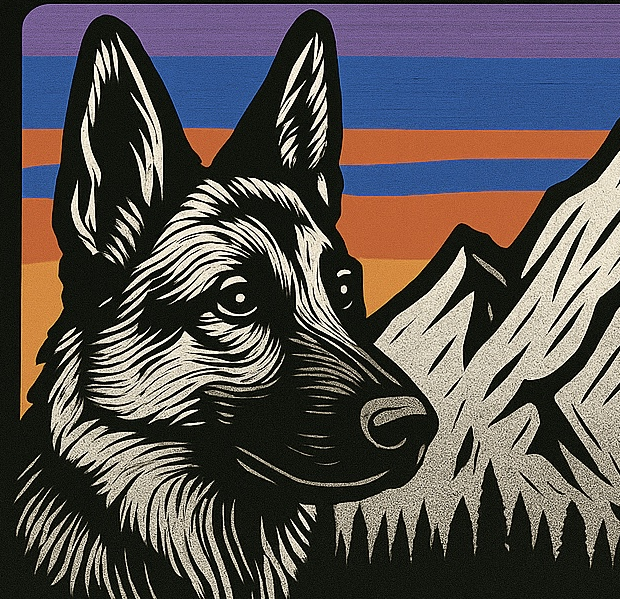
black bears, not grizzlies
The Sierra Nevada has American black bears (fur can be brown or cinnamon). They’re smart, strong, and driven by smell — not out to hunt people.
wildlife
Tahoe Donner is black bear country. They live in the forest behind the haus and pass through the neighborhood looking for easy food. A little care keeps you, your dogs, and the bears safer — and keeps the wild ones wild.
the basics
The Sierra Nevada has American black bears (fur can be brown or cinnamon). They’re smart, strong, and driven by smell — not out to hunt people.
Trash, coolers, pet food, BBQ grease, bird seed, and scented toiletries in a car all pull bears into yards and porches. Secure attractants and most problems never start.
Serious encounters in California are uncommon. Most “trouble” is property damage when a bear finds an easy meal. Don’t reward them — and don’t get close for a photo.
Bears are out spring through fall, and can show up any time of day — dawn, dusk, and overnight are classic. Lock up before bed like you would in any mountain town.
stay alert
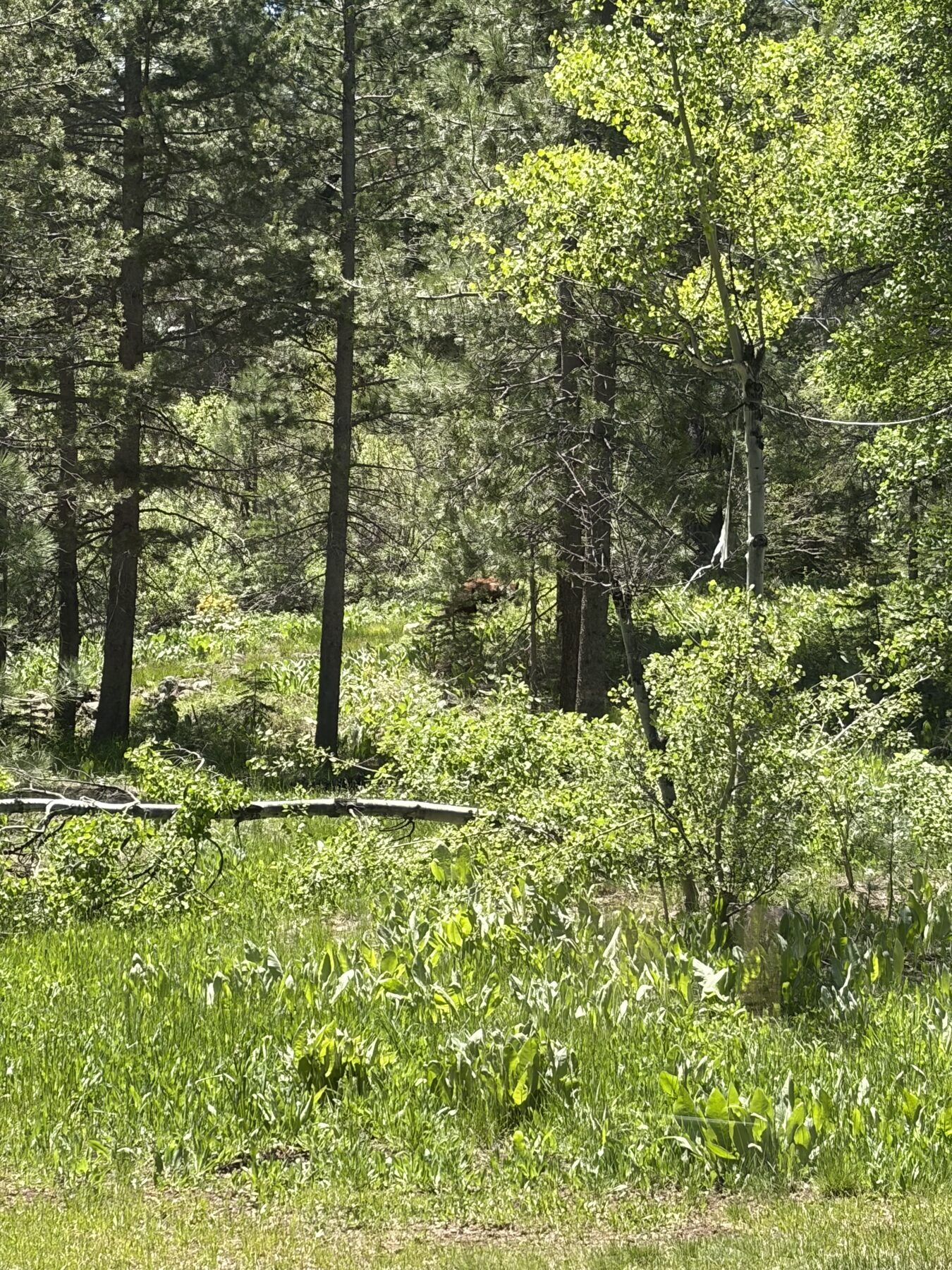
A cinnamon-colored black bear can blend into green cover surprisingly well. Scan the trail edge, driveway, and brush before stepping out — and never approach for a closer look.
at the haus
Host habits that work in Tahoe Donner — same ideas you’ll see from Tahoe Donner Association and California Fish & Wildlife.
neighborhood crossings
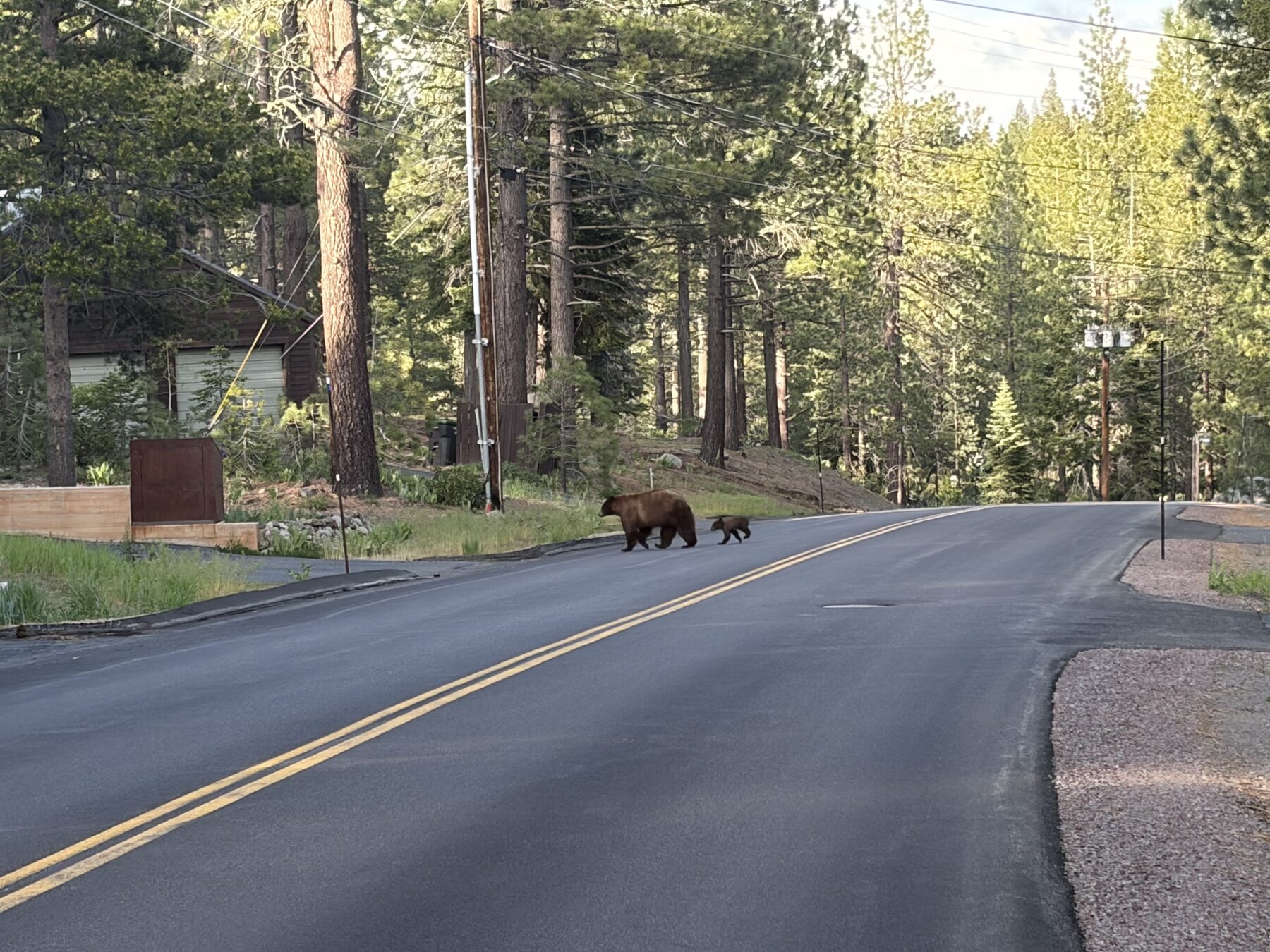
Bears move through residential roads, too. Slow down on forest drives, give a mother and cubs a clear route, and keep food and trash secured in bear-resistant enclosures — never loose in the car or outside overnight.
if you see one
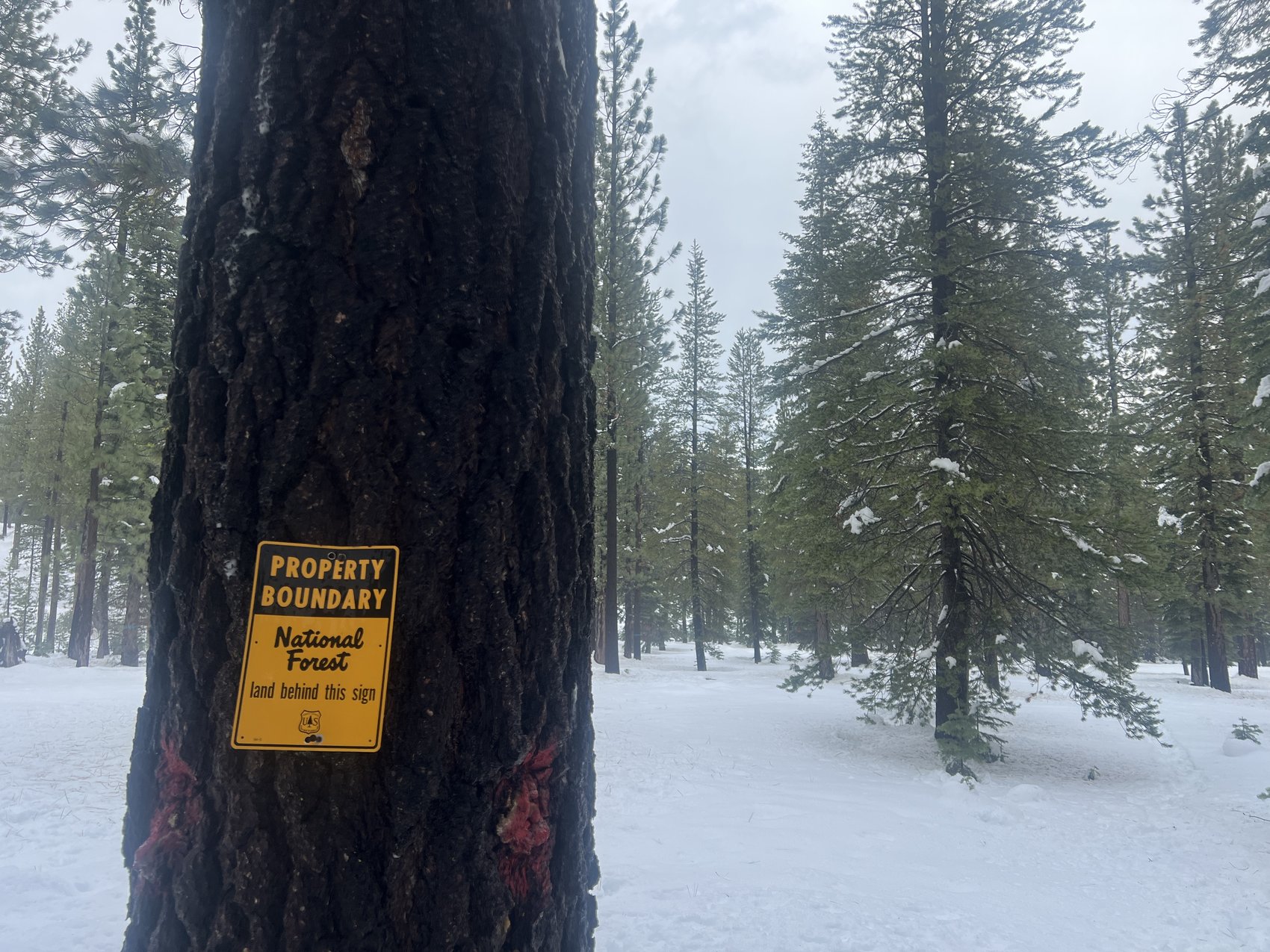
This is general public guidance for Sierra black bears — not a substitute for official advice in an emergency. When in doubt, get people and pets inside and call for help.
trails & nights
Forest and creek trails behind the neighborhood are beautiful — and that’s bear habitat. Make a little noise on blind corners, keep kids close, and carry out every snack wrapper. After dark, use a light on the walk from the car and don’t leave the BBQ or cooler “for later.”
bear bluffs
A bluff charge looks scary, but it’s a bear saying “you’re too close,” not a bear hunting you. Bluff charges are more common than real charges and rarely end in contact.
Warning signs first: huffing or blowing, jaw popping or teeth clacking, moaning, swatting or stomping the ground, ears laid back. Then a short, bounding run toward you that stops short or veers off to one side.
It’s defensive. A bear that’s surprised, feels cornered, or is guarding food or cubs uses bluster to make you leave. Wildlife pros describe it as a sign of stress, not an impending attack.
Don’t run and don’t climb a tree — you can’t outrun or out-climb a black bear. Stand your ground, stay together, make yourself big, and talk calmly and firmly so it knows you’re a human.
Slowly back away while keeping the bear in view, and leave it a clear escape route. Never approach, follow, or try to get a photo. If a black bear ever makes contact and keeps attacking, fight back.
Sources: NPS — bluff vs. aggressive charges · BearWise — bear encounters · Sequoia & Kings Canyon NPS — black bear encounters · Yosemite Keep Bears Wild — bluff charging · BEAR League (Tahoe hotline 530-525-7297)
watch
go deeper
We keep this page practical and host-voiced. For the latest local and state guidance: